Creed is one of the biggest – and most divisive – niche houses. (I won’t go into the controversy behind the brand. For that, you can read my interview with Gabe Oppenheim here.) Instead, I thought I’d delve into what I perceive as a change in the direction of Creed fragrances.
At their best, I’ve associated Creed fragrances with many genre classics with a timeless spin: Green Irish Tweed (1985), Bois du Portugal (1987), Virgin Island Water (2007), et al.
The 2012 release, Acqua Fiorentina The Encore EDP, fits very much into that mould. It has a big spicy carnation element, which always gets me, along with the fruitiness of apple and plum, and low-key cedarwood and sandalwood. It’s sophisticated without trying too hard.
The 2025 release Oud Zarian EDP couldn’t be more different. It shouts its difference so much that I don’t see it as a Creed. But then I haven’t seen most of their recent releases as Creed fragrances. For example, Carmina (2023), Queen of Silk (2024), Eladaria (2025), etc. Has the house changed, as it should, and I’ve been left behind?
Royal Oud (2011) and Royal Princess Oud (2015) are very accessible takes on the raw material. Oud Zarian takes the familiar spice-rose-frankincense combo and serves it up with an apparently 70-year-old variety of oud and lots of liquorice to create something undeniably distinctive and downright perplexing.
“This stuff scares me. Something quite meaty (not animalic) about it and that puts off my inner vegetarian.”
I’m quite adventurous olfactorily but this stuff scares me. Really. It’s bold but not enjoyable at all. Something quite meaty (not animalic) about it and that puts off my inner vegetarian.
Going back to my original point, the Creed of old is just that and in its place with the house now owned by L’Oréal Luxe, we’ll see a mix of the commercial and occasionally bold statement pieces. As part of that I see their classics are being relaunched in new-look bottles. And now I’m speculating: could the recent release of Wild Vetiver EDP herald the phasing-out/discontinuation of Original Vetiver (and other older Creed fragrances)? But that’s a whole different other story…
Linda Evangelista once said: “We don’t wake up for less than $10 000 a day.” While I’m not as demanding or diva-ish as the supermodel, I also need a very good reason to get out of bed to trek the more than 30km to one of Johannesburg’s most popular shopping malls, Sandton City. On this particular day, there was a splendid reason to get going: Chanel. More specifically the opening of the relocated Chanel beauty and make-up boutique and the launch of Chanel Coco Mademoiselle Crush Absolu EDP.
More about this fragrance below. In the meantime, some pics of the Chanel boutique.
The theme was a Parisian café and being Chanel, it could only be très chic.
Bigger is not always better. But when it comes to creating a sense of luxury, this larger store does that in style.
This boutique is home to the brand’s skincare, make-up and fragrance ranges. So plenty to keep the eye, nose and wallet busy.
The seating area for private consultations gives an air of personalised exclusivity.
PS: When I was offered a cocktail at this event (and it wasn’t even 11am), I asked myself: “What would Coco do?” She would, so I did…
CHANEL COCO MADEMOISELLE CRUSH ABSOLU EDP
One of the things I admire about Chanel is that it doesn’t flanker the life out of its fragrances. Unlike its main competitor, which shall remain nameless. In this case I’m talking about the latest launch, Chanel Coco Mademoiselle Crush Absolu EDP.
The OG was launched way back in 2001. Created by then in-house perfumer Jacques Polge, it went on to become a major success for the French luxury house, often outselling the iconic No 5.
From the first spray of Crush Absolu you’ll know this is a Coco Mademoiselle. With some differences, of course. Otherwise, why bother with a flanker.
Litchi brings a noticeably sweet, slightly tropical element to this Olivier Polge composition, leading to the florals of fruity rose and jasmine.
“The OG was a definitive patchouli bomb and here again, it’s pronounced and distinctive in its earthy ways, along with vetiver.”
The OG was a definitive patchouli bomb and here again, it’s pronounced and distinctive in its earthy ways, along with vetiver. There’s also creamy vanilla and powdery amber in the mix.
It’s not as complex as its predecessor but has more depth and immediate gratification for a younger market that will also appeal to those older than its intended demographic.
The OG was the brand’s way of tapping into a younger market. That demographic is all grown-up now and Crush Absolu becomes the new way to get the elegant young’uns into Chanel.
Without getting pseudo-philosophical, that’s a cycle of life for you.
I’ve never met Frank Voelkl. But I’ve taken a keen interest in his career over the years. Partly because I enjoy many of his creations. And then because he’s always been super helpful and friendly when I’ve needed clarification on topics such as synthetics and popular ingredients. So when the company he works for, dsm-firmenich, recently announced he’d been made a master perfumer, I jumped in, congratulated him and had to find out more.
IMAGE: dsm-firmenich.
Along with Marie Salamagne, Frank Voelkl joins other esteemed master perfumers at dsm-firmenich: Alberto Morillas, Olivier Cresp and Nathalie Lorson.
In these times, when over-use of a word or phrase makes it meaningless – “iconic”, “classic”, I’m looking at you – and “master perfumer” increasingly on that list, I interviewed Frank Voelkl on the making – and meaning – of a master perfumer.
How did you celebrate when you were told about this achievement?
To be honest, my first reaction was gratitude rather than celebration. Being named a master perfumer is such a rare distinction that it makes you reflect on the many people who helped you along the way.
“Being named a master perfumer is such a rare distinction that it makes you reflect on the many people who helped you along the way.” – Frank Voelkl
I shared the news with my family, opened a good bottle of wine, and took a moment to appreciate the journey. When you’ve been doing this for many years, these milestones feel less like an individual achievement and more like the culmination of countless collaborations, encounters and creative adventures.
Who was the first person you told about it (outside of work)?
My wife. She has been part of this journey from the very beginning and has influenced my life and even my creative palette more than she probably realises. Throughout a perfumer’s career there are many highs and lows, successes and disappointments, and having someone who shares all that makes any recognition much more meaningful.
Adidas Vibes Spark Up EDP (2025).
What does the designation “master perfumer” mean?
For me, it is first and foremost a responsibility. Of course, it recognises a body of work and many years of dedication to the craft, but it goes beyond creative achievements.
A master perfumer is a guardian of perfumery knowledge, someone who contributes to the evolution of the art while helping transmit it to future generations. It is about creativity, mentorship, innovation and a commitment to excellence over the long term.
Le Labo Iris 39 EDP* (2006).
Does it annoy you when you see the term “master perfumer” being used so freely nowadays?
I wouldn’t say it annoys me. The industry has evolved and different companies use different systems of recognition. What matters most is that titles reflect a genuine contribution to the craft. In my case, what makes this designation particularly meaningful is the rigour of the process and the fact that it is awarded very selectively. That gives it a special significance.
“What makes this designation particularly meaningful is the rigour of the process and the fact that it is awarded very selectively.” – Frank Voelkl
I will say, though, that self-proclaimed Masters of the Craft that appear now and then on social media can be a bit irritating!
Ariana Grande Mod Blush EDP (2022). IMAGE: Ariana Grande Fragrances.
On a practical level, what does the designation entail?
The funny answer is: I still have to come back to the lab the next morning and create fragrances! But on a deeper level, I think it reinforces my role as a mentor, a creative leader and someone who helps shape the future of perfumery.
I already spend a great deal of time working with younger perfumers, sharing what I learned from mentors like Maurice Roucel and Arturetto Landi, as well as the master perfumers at dsm-firmenich. Becoming a master perfumer strengthens that commitment to transmission, to pushing our craft forward and to represent the values and the vision of the company.
Calvin Klein My Euphoria EDP (2023). IMAGE: Calvin Klein.
Your body of work speaks for itself. Are there any specific creations of yours you think contributed to this master perfumer achievement?
It’s difficult for me to single out one fragrance because every creation teaches you something new. Having said that, certain fragrances clearly marked important moments in my career.
“These creations reflect what I’ve always tried to do: keep moving, keep learning and never repeat myself.”
Le Labo Santal 33 (2011) opened a new chapter and became a cultural phenomenon. You for Glossier (2017) connected with an entirely new generation of consumers. Gucci Bamboo (2015), Phlur Father Figure (2023), Le Labo Thé Matcha 26 (2021) and my continued work with Le Labo helped me explore very different facets of perfumery. I’m proud that these creations are so diverse because they reflect what I’ve always tried to do: keep moving, keep learning and never repeat myself.
Le Labo Santal 33 EDP* (2011).
Was becoming a master perfumer ever a goal of yours? Or is it something that just happened over the years?
When I started my career, I wasn’t thinking about titles. I was thinking about becoming a better perfumer. My goals were much simpler: learn from great mentors, create fragrances that people would remember and continue growing creatively. Looking back, becoming a master perfumer feels less like reaching a destination and more like the natural result of decades spent pursuing excellence, curiosity and reinvention.
Phlur Father Figure EDP (2023). IMAGE: Phlur.
One of the lessons I’ve always carried with me is that you should never remain stuck in a rut. You have to keep looking forward. That mindset has probably guided me more than any specific career ambition.
Are there any perks to being a master perfumer?
The greatest perk is probably feeling part of a lineage. I am honored to join colleagues whom I deeply admire and whose careers I have followed for many years. There is also something rewarding about knowing that your peers and your company recognise not only what you have created, but how you have contributed to the profession itself.
Glossier You EDP (2017). IMAGE: Glossier.
That being said, there is no special parking spot and no secret master perfumer lounge! The real reward remains the same as it has always been: creating fragrances.
For the upcoming official event in September 2026, would thoughts about what fragrance you’re going to wear occur to you?
Absolutely! Perfumers think about fragrance the way musicians think about music. The challenge will be choosing just one. I tend to wear fragrances that have personal meaning rather than simply making a statement. I already have something in mind that I’ve been working on for the occasion, but I may not decide until the very last minute.
DKNY 24/7 EDP (2024). IMAGE: Donna Karan.
Fortunately, September in Paris offers wonderful weather for fragrance, so I have time to think about it.
Inspired by my fellow bloggers, I also undertook a fragrance collection edit earlier this year. What I still loved and should keep, what I liked but could go. In the process, I came across three Alaïa fragrances, which I remember enjoying very much when they were launched last decade. How do I feel about them now? More about that below, but first a quick look at the designer Azzedine Alaïa and his significance.
ABOUT AZZEDINEALAÏA
Azzedine Alaïa came to prominence in the 1980s. His designs were very much in tune with the aesthetic of the decade. But he made it his own with the immaculate tailoring, clingy silhouettes and sculptural forms that he’d honed over the decades since his move from his country of birth, Tunisia, to Paris in 1956.
BEFORE PARIS: Azzedine Alaïa at the School of Fine Arts in Tunis in 1951. IMAGE: Azzedine Alaïa Foundation.
A self-confessed perfectionist – “Perfection is never achieved, so you need to go on working,” he said – he made a name for himself as a haute couturier at a time when the art was increasingly confined to houses with clients with deep pockets.
HANDS-ON PERFECTIONIST: Azzedine Alaïa with Linda Evangelista in 1984. Image: Sante D’Orazio.
Alaïa did many things unconventionally during his career, from being self-taught to refusing to show collections according to fashion week dictates. So his late entry into the fragrance business in 2015, with Alaïa EDP and then Alaïa EDP Blanche in 2016 and Alaïa EDP Nude in 2017, should come as no surprise. An extrait version of Alaïa was also launched in 2015 – alas, I haven’t tried that one.
What happens when the founder of a house dies? If you’re Giorgio Armani, Thierry Mugler and Karl Lagerfeld, among others, the fragrance side of the business continues. But when Alaïa died in 2017 at the age of 82, that was the end of the fragrance foray. Until recently, Alaïa fashion was under the direction of Belgian designer Pieter Mulier. And I must admire that sense of finality for the perfumes.
Read The Guardian obituary for more on the man, who is hailed as one of the great designers of the 20th century.
FASHION AS ART: In 2013, the Palais Galliera presented the first retrospective in Paris of Alaïa’s work. IMAGE: Ilvio Gallo.
ALAÏAMOMENTS
* Upon his arrival in Paris, he was employed in the workshops of Christian Dior for all of five days. He was fired for not having the correct paperwork. When John Galliano was dismissed from Dior in 2011, Alaïa refused the top job of creative director, knowing it would trap him in an endless cycle of fashion shows.
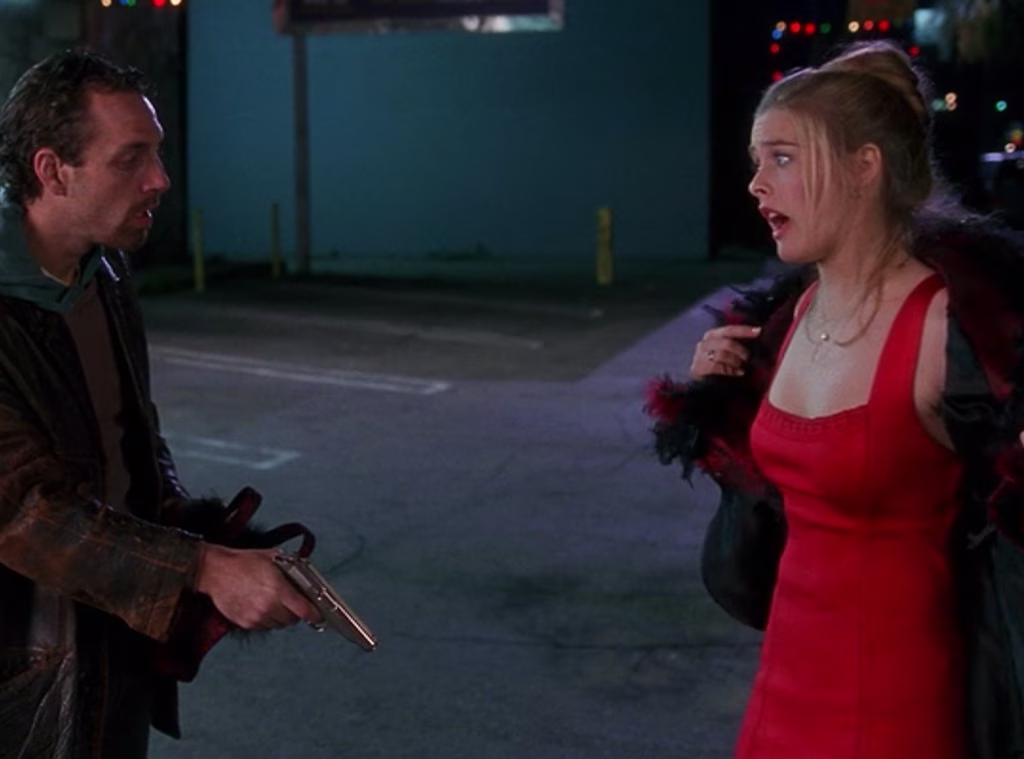
* In a perfect pop culture moment, in the 1995 film Clueless, the character Cher Horowitz (played by Alicia Silverstone) exclaims, “You don’t understand, this is an Alaïa!”, when she’s forced to lie on the ground by a mugger.
POP CULTURE PRINCESS: Alicia Silverstone wearing Alaïa in the cult-classic Clueless.
* Alaïa was an obsessive collector of the works of other couturiers, including more than 500 pieces by Christian Dior. These archives are remarkable histories of fashion and have gone on to become exhibitions in their own right, such as the recent Azzedine Alaïa’s Dior Collection in Paris.
COUTURE COLLECTOR: Part of the Azzedine Alaïa’s Dior Collection exhibition at La Galerie Dior in Paris in 2026. IMAGE: Adrien Dirand.
* When Naomi Campbell arrived in Paris at the age of 16, he gave her a home but insisted she obey his strict rules, including not going to nightclubs. In an interview with The Independent, the supermodel said: “I call him ‘Papa’ and we really do have a father-daughter relationship. When he’s pissed off with me, he picks up the phone and calls my mother.”
ALAÏA FRAGRANCES
All Alaïa fragrances were created by Marie Salamagne. And although they don’t have the hype of her other creations, including Guerlain Allegoria Mandarine Basilic EDT (2007), Maison Martin Margiela By The Fireplace EDT (2015), Atelier des Ors Lune Feline EDP (2015) and Gucci Flora Gorgeous Orchid EDP (2024), no doubt they played their part in her recently being recognised as a master perfumer by dsm-firmenich.
IMAGE: dsm-firmenich.
The bottles designed by Martin Szekely deserve a mention too. Minimalist but rich in meaning, the gold cap represents a golden spool of thread and the patterns on the bottles (also on the perfume boxes) are a nod to Tunisian geometry and the cut-outs Azzedine Alaïa became famous for.
ALAÏA EDP
Fragrance nerd fact: the debut fragrance from the Paris-based luxury fashion brand was awarded the top five stars in the most recent edition of the prestigious Perfumes: The Guide by Luca Turin and Tania Sanchez.
A contrast between cold and warm notes, the Tunisian-born designer wanted it to feel like a second skin. And that’s exactly what perfumer Marie Salamagne achieved with it.
The fresh and airy opening progresses to a floral heart with nuances of peony, freesia and rose, while leather and white musk define the drydown.
It’s an impeccably smooth, high-quality leather scent, with none of the aggressiveness that pervades the genre.
ALAÏA EDP BLANCHE
Vanilla has been over done for several years now, but this is how I love it: serene and soothing, even when it’s sweet and the main component of a scent. While memories of Tunisia inspired Alaïa EDP and Alaïa EDP Nude, Alaïa EDP Blanche was inspired by the designer’s visit to the Alhambra fortress and palace in Granada, Spain.
I haven’t had the pleasure of seeing this unique example of medieval Islamic architecture myself. But from reading about it and marvelling over the pics online, I get a strong sense of how Marie Salamagne interpreted the welcoming coolness of the fountains and pools with notes of almond, heliotropin and vanilla absolute.
ALAÏA EDP NUDE
There’s no place for tacky in the world of Azzedine Alaïa, so “nude” here is all about the sensuality of skin, with a large dose of the synthetic Cashmeran creating a suitably warm musky ambience. Cedarwood adds to the softness.
The skin-like mood continues with orange blossom pushed in a slightly animalic direction, with just the right amount of sweetness from tonka bean in the drydown.
If leather in Alaïa EDP is black and often cool, here it is fleshed out with the warmth of human touch.
I’ve been absent from the blogosphere (do we still use this term?) for some time – my last post was on 17 May 2026. The longest I’ve not posted since I got into the blogging thing. Wish I could say I’ve been away on an exotic beach holiday. But the reality is far more mundane.
Life, in the form of a new job* and all the relentless pressures and stress that came with it, meant I simply didn’t have the headspace or time to blog (although I did my best to keep up with many of your posts).
Fragrance during this time took on a different meaning for me. Often a functional spray and go, which didn’t require much thinking. Other times, in complete contrast, I kept on coming back to my bottle of Narciso Rodriguez Fleur Musc EDP.
OVER-THE-TOP APPEAL OF NARCISO RODRIGUEZ FLEUR MUSC
Part of the appeal of this discontinued 2017 release from the American designer brand is its borderline kitsch pink presentation. It smells over the top too. Narciso Rodriguez Fleur Musc EDP was co-created by Calice Becker and Sonia Constant at a time when the house stood out from its rivals with a more daring approach that made it one of my favourite brands.
Fleur Musc starts out with the soft floral spice of pink peppercorn and then boom, ROSE!, supported by the freshness of freesia. This isn’t a realistic garden rose. It’s rose taken in a dramatic, full-on direction, with lots of the Narciso Rodriguez signature musk and earthy patchouli upping the ante.
I didn’t know if I was coming or going at work, but with Fleur Musc I certainly knew what I was doing in this realm: living an escapist fantasy.
Some people think you shouldn’t wear fragrances you love during tumultuous periods due to the associations they might form. I’m not of that school and know that when I come back again to Fleur Musc, I’ll still relish its extravagant ways, but hopefully without any accompanying real-life drama.
*I’m using the past tense for this work situation, as I had to recognise my limitations and resign.
I can’t remember exactly when Akigalawood started being used in fine fragrances. But I know exactly when, to quote Malcolm Gladwell, it reached a tipping point when I saw it as part of the name of the 2024 release, New Notes Akigala Mandarino Extrait de Parfum. The captive ingredient*, exclusive to Givaudan, features in increasingly more fragrances. And is a great example of the growing role of biotech in perfumery.
IMAGE: New Notes.
From my research, some of the first fragrances to feature Akigalawood: Natura #Urbano EDT (2014), John Varvatos Dark Rebel EDT (2015), Miu Miu EDP (2015) and Comme des Garçons Blackpepper EDP** (2016).
In recent years, it’s made its way into niche favourites such as Amouage Guidance EDP (2023) and designer standouts such as Hermès Barénia EDP (2025) alike.
I noticed that Givaudan’s Vice-President of Perfumery, Fragrance & Beauty, Jordi Fernández, has utilised it in many of his creations. So I asked him some questions on how and why he uses it. See his answers below.
IMAGE: Givaudan.
Pierre Arnoux, Givaudan Marketing Manager S&T and FIB, also shared his insights in the interview below that one.
[*In my communications with Givaudan’s communications department, they stressed, “Akigalawood is a captive ingredient (not a molecule). Akigalawood is a natural (complex mixture) and not a single molecule.]
INTERVIEW WITH JORDI FERNÁNDEZ, GIVAUDAN MASTER PERFUMER
How would you describe Akigalawood?
Akigalawood has vibrant spicy character, combining peppery nuances with woody facets reminiscent of patchouli and agarwood. It gives a unique refined and lasting trail to a fragrance.
I would describe it as a luminous, spicy and full-bodied woody note that enhances the natural depth of patchouli facets in a composition.
PERFUME PROTECTION: The Jordi Fernández creation Ex Nihilo Blue Talisman EDP (2023) also features Akigalawood.
Were you involved in its development in any way, from a perfumer’s perspective?
I was not directly involved in the development of Akigalawood. In that kind of process, research perfumers collaborate with the scientific team to evaluate new materials as they are created.
“This interaction between scientific and creative perspectives is essential in deciding which new materials will join the perfumers’ palette.”
Later, other perfumers may test these ingredients in real composition contexts. We assess how they perform across different types of briefs, considering aspects such as olfactive fit, technical constraints, regulations, cost and compatibility with other ingredients. This interaction between scientific and creative perspectives is essential in deciding which new materials will join the perfumers’ palette.
Were you a fan of it from the beginning? Or did it take time for you to appreciate it?
I started working with Akigalawood from the very beginning of its introduction. At first, it took me some time to truly understand its character and how to reveal its full potential in a composition.
Patchouli has always been my favourite ingredient. For me, it represents the power of the earth, a kind of natural strength that is deeply symbolic and that perfumery can express in a very direct way.
CONNECTION: Montblanc Explorer EDP (2019) expresses Jordi Fernández’s love for both patchouli and Akigalawood.
When I discovered Akigalawood, I immediately felt the connection. It is derived from patchouli and carries part of its character, but in a more refined and contemporary form. From the first trials, I appreciated how it could bring elegance, modernity and a distinct woody-spicy signature to a fragrance.
Specifically, let’s talk about how you’ve used it in some of your creations. 27 87 Genetic Bliss EDP** (2018) features a number of captive ingredients, including Akigalawood. Was it your idea to include all these captives?
Genetic Bliss was the fifth fragrance in the Next Generation Collection, and we decided to explore in depth the possibilities of captive ingredients in perfumery. That’s why we chose to work captive, exclusive, high-quality ingredients that could express a very modern identity.
What did Akigalawood bring to Maison Crivelli Oud Maracujá Extrait de Parfum** (2023)?
It brings a vibrant, spicy-woody facet that echoes the character of natural oud while adding a modern sense of clarity and diffusion. In this fragrance, Akigalawood helps bridge the richness of the oud accord with the fruity intensity of passion fruit and the luminous notes around it. It adds texture and resonance, reinforcing the tension between freshness and warmth, which defines the scent’s identity.
BDK Impadia EDP** (2025) has an oud-ish quality. Would that be Akigalawood at play there?
In Impadia, Akigalawood adds the woody and slightly spicy depth that can evoke the character of oud or agarwood. It brings a refined density and warmth to the fragrance, supporting the floral heart and enhancing the creamy, sensual base. Its spicy-woody vibration helps bridge the freshness of the rose bouquet with the roundness of the woods, contributing to the elegant trail that gives the composition its contemporary personality.
Are you encouraged, in the form of incentives, to use Akigalawood in your compositions?
As perfumers, we have complete creative freedom to choose the materials that best serve the concept and emotion we want to express. Of course, discovering and working with new ingredients is always exciting, but their inclusion in a formula depends entirely on olfactive relevance.
“Working with new ingredients is always exciting, but their inclusion in a formula depends entirely on olfactive relevance.”
INTERVIEW WITH PIERRE ARNOUX, GIVAUDAN MARKETING MANAGER S&T AND FIB
In my quest to find out more about Akigalawood, Pierre Arnoux answered a few questions, too. The S&T and FIB in his designation stand for Science & Technology and Fragrance Ingredient Business, respectively.
IMAGE: Givaudan
What are captive ingredients?
Captives are fragrance ingredients that have been created and patented by Givaudan. They are available exclusively to Givaudan perfumers, allowing them to craft original and distinctive olfactive signatures that cannot be replicated elsewhere.
When did Akigalawood become available?
Akigalawood was introduced into Givaudan’s perfumers’ palette in 2014.
IMAGE: Natura.
Did anyone, in particular, invent it?
Akigalawood was developed by Givaudan’s research team in our biotechnology laboratory in Dübendorf, Switzerland (now Kemptthal).
Why is it such an appealing material?
Akigalawood adds a refined and contemporary character to fragrances. It combines woody and spicy unique facets that contribute depth and vibrancy to a composition.
It’s not a synthetic, but an example of a natural produced by biotech. What does that mean?
Biotechnology is a sustainable way to produce ingredients. It uses natural enzymes to transform materials. These enzymes act like microscopic factories – it’s similar to how enzymes are used in processes like brewing beer or making yoghurt.
We can use biotech to produce synthetic molecules or naturals. For example, Ambrofix is a synthetic molecule and it’s produced by biotech from sugar cane.
“Enzymes derived from fermentation processes act on patchouli oil residues to create a novel fragrance ingredient, allowing it to remain natural while gaining new olfactory qualities.”
Akigalawood, on its own, is a natural material, produced thanks to biotech. In the case of Akigalawood, enzymes derived from fermentation processes act on patchouli oil residues to create a novel fragrance ingredient. This approach allows the material to remain natural while gaining new olfactory qualities.
Was there a particular need for Akigalawood in the perfumers’ palette?
Givaudan continuously seeks new ingredients that can provide perfumers with distinctive signatures and creative possibilities. Akigalawood was developed to broaden this palette with a new type of woody-spicy facet.
Could you give us a quick list of other Givaudan captive ingredients?
While most captives remain confidential for intellectual property reasons, several have been shared publicly and advertised by our customers as hero ingredients, including Mahonial, Rosyfolia, Pomelol, Rosabloom, Petalia, Sylkolide and Ebelia.
No, this is not a post about the ongoing gourmand obsession. It’s something altogether more existential, if you will.
As I was scrolling through a website offering pages upon pages of rip-offs / clones / dupes (never mind doom scrolling, this is ’fume scrolling), it occurred to me that perhaps we’ll get to the stage where there will rip-offs of rip-offs.
So picture the scene: we went from the hugely popular Maison Francis Kurkdjian Baccarat Rouge 540 to probably its most well-known rip-off, Fragrance World Barrakat Rouge 540.
Is it a step too far to imagine a clone of the latter? Let’s call it Barrakesh Rouge 540. That iteration, through the power of social media, becomes so popular, it leads to another clone. See where I’m going with this?
IMAGE: Fragrance World.
Of course, each clone becomes further removed from the original, so much so that it disappears into the mists of memory. Almost like a pop song that gets covered so regularly, it’s easy to forget who did the original.
Is this scenario far-fetched? Initially, I thought so. But as my scrolling, er, research on rip-offs continued and I come across more renditions of Maison Francis Kurkdjian Baccarat 540, maybe not.
IMAGE: Pendora Scents.
If you want to know why, for example, in the UK, perfume manufacturers can trademark their brand names, labels and bottle shapes, but not the scent of an original fragrance,read this informative piece from The Guardian.
*Disclaimer: While I don’t use AI in any of my other fragrance images, I found Microsoft’s Copilot very useful in helping to create some of these graphics with one of my OG images.
When I realised recently one of my favourite fragrances, Lalique Encre Noire EDT, marks its 20th year in production, I had to do something to celebrate this remarkable achievement. But how?
LALIQUE ENCRE NOIRE EDT: SO MUCH TO SAY…
I could say it’s the definition of a modern classic. But that’s obvious.
Or that it’s gone onto become a reference vetiver fragrance, along with Guerlain Vetiver EDT, Tom Ford Grey Vetiver EDP, Chanel Sycomore EDP and Carven Vetiver EDT.
Then there’s its huge crossover appeal in terms of male / female and designer / niche binaries.
And let’s not forget: it still offers unbeatable value at a time when fragrances have become ridiculously expensive.
Or that even with the success of the OG, it hasn’t been flankered to death. In fact, its flankers – Lalique Encre Noire Sport EDT (2013), Lalique Encre Noire A L’Extreme EDP (2015) and Lalique Encre Indigo EDP (2023) – have maintained and built on the quality of the OG with distinctive variations on the vetiver theme.
I could be clever and go into detail on the materials in the composition. How apart from Haiti vetiver and Bourbon vetiver, it also includes the hemi-synthetic (or semi-synthetic) Vetiveryl Acetate and the synthetic Cashmeran.
Or that the instantly recognisable bottle was inspired by the “Biches” inkwell designed by René Lalique in 1913, according to the Lalique website.
Oh, and its creator, master perfumer Nathalie Lorson, seems to have explored a similar inky theme in L’Artisan Parfumeur L’Amant EDP (2026). But I haven’t tried it yet, so what would I know…
How about mentioning it was one of the first fragrances I featured on my blog?
Yes, I could do all of that. Which I just have. Or I could just wear it. A lot. To feel its contrasts of freshness and darkness, earthiness and elegance. Can’t think of a better way to celebrate Lalique Encre Noire EDT, in fact.
It’s a small world, even more so in perfumery. I recently interviewed Antoine Lie about Puredistance Ysayo. And then I interviewed Guillaume Flavigny, who mentioned that he trained under Antoine Lie. After studying at ISIPCA between 1998 and 2000 and Givaudan’s Perfumery School until 2003, Guillaume Flavigny joined the Givaudan Paris team, where he worked with Antoine Lie for two years.
IMAGE: Givaudan.
No doubt, the master was a key figure in Guillaume Flavigny’s career development. And in the more than two decades since then, Guillaume Flavigny has gone onto become a highly respected creator himself, as evidenced by the list of some of his creations below:
+ Pierre Balmain Ambre Gris EDP (2008)
+ Guess Seductive Homme Blue EDT (2012)
+ Moschino Cheap & Chic Chic Petals EDT (2013)
+ Comme des Garçons Black EDT (2013)
+ Initio Divine Attraction EDP (2015)
+ Commodity Tonka EDP (2017)
+ Elizabeth Arden White Tea EDT (2017)
+ The Harmonist Yin Transformation Parfum (2018)
+ Valentino Uomo Born in Roma EDP (2019)
+ Tom Ford Rose Prick EDP (2020)
+ Sisley L’Eau Rêvée D’Isa EDT (2023)
+ Yves Rocher Bouquet Ambré EDP (2026)
I’m familiar with most of these perfumes, but it’s his 2025 creation for the Japanese designer brand, Comme des Garçons Max Richter 01 EDT, which reminded me just why Guillaume Flavigny has notched up several awards over the years.
This composition displays the creativity one would expect from CDG and a fragrance inspired by the music of Max Richter (a 2026 Oscar nominee for best original score for Hamnett). The brand has displayed synthetics in striking ways since its entry into fragrance in the 1990s. And Max Richter 01 EDT continues in that vein.
IMAGE: Max Richter.
You might scoff at the listed notes on the bottle: graphite, vetiver, piano soundboard cedar, Vn bow rosin, transistor and magnetic tape. But in this case, the artistic licence pays off with a fragrance that unmistakably evokes music instruments.
And while I don’t normally comment about performance, this EDT lasts an incredibly long time, a much-needed counterpoint to all those who look down on this concentration in the extrait de parfum era. More importantly, however, Comme des Garçons Max Richter 01 EDT is memorable in all the right ways.
You studied chemistry before going to ISIPCA. Has that technical background given you an advantage in perfumery?
You need chemistry to enter ISIPCA, but it’s not necessary for Givaudan’s Perfumery School.
“Like a musician puts sounds together, I mix different raw materials together to create a new story.” – Guillaume Flavigny
A perfumer doesn’t need chemistry, just passion, a great nose, an amazing memory and creativity. Perfumes are all about emotions and not chemistry. Like a musician puts sounds together, I mix different raw materials together to create a new story.
IMAGE: Yves Rocher.
Elizabeth Arden White Tea EDT (2017) is a fragrance I keep coming back to. Is it the kind of fragrance you’d wear yourself?
I love to take “a shower” with this perfume – it’s clean, easy and genderless, with a soft amber and a touch of orris. It’s one of my daughter’s favourites, along with Montblanc Signature EDP and Tom Ford Cherry Smoke EDP, which I also created.
You co-created Montblanc Signature EDP (2020) with your Givaudan colleague Natalie Gracia-Cetto. Do you find these collaborations easy, or do you prefer working on a composition by yourself?
It’s great to share, as you always learn from others. For Signature, it was my idea and Natalie came in at the end to fine-tune the perfume. I was working in New York at that time.
One of the things I love about Sisley L’Eau Rêvée D’Isa EDT (2023) is the big hit of oakmoss in the drydown. How did you get that effect without contravening the IFRA standards?
The chypre structure offers lots of elegance. To replace a part of the oakmoss, I played with Evernyl [the synthetic], amber, dry amber and vetiver.
IMAGE: Sisley.
Let’s talk about Comme des GarçonsMax Richter 01 EDT specifically. How did you go about creating it?
The idea was to translate music instruments, the metal of violin strings, the wood of a piano, the synthetic smell of a vinyl disc, the mood of a concert.
This perfume is a surprising and very rich mix – dark and luminous, black and white like a piano. I was very inspired because I love the music of Max Richter. I play the piano and I’m always working with music.
Were you familiar with the work of Max Richter before you started the project?
Yes, because of my father, who had a strong passion for music.
You also played with synthetics in Tom Ford Black Lacquer EDP to great effect. Is the fundamental value of synthetics getting lost in the push for more natural ingredients?
There is no conflict between naturals and synthetics. A good perfume is a mix of both. Some synthetics are much more expensive than many natural raw materials. I need synthetics for modernity, creativity and sometimes for their performance.
“There is no conflict between naturals and synthetics. A good perfume is a mix of both.” – Guillaume Flavigny
IMAGE: Tom Ford.
Max Richter 01 EDT is not your first fragrance for the brand. That would be Black (2013). Can we expect another collaboration with Comme des Garçonsin the future?
Oh, I hope so, yes. I’m working on it.
You’ve won quite a few awards in your career so far. Is there one that has particular significance for you?
Yes, the first award I received when I was still in Givaudan school in 2002, the international prize for the best young perfumer [Prix International du Jeune Parfumeur Createur].
And where do you keep your awards?
I keep the awards in my office. The last ones were for Rochas Eau de Rochas Citron Soleil EDT [Best Fragrance at the 2023 Prix Vénus Version Femina] and Valentino Born in Roma Donna EDP Intense [2024 Fragrance of the Year in the Women’s Luxury category at The Fragrance Foundation Awards].