
I’ve never met Frank Voelkl. But I’ve taken a keen interest in his career over the years. Partly because I enjoy many of his creations. And then because he’s always been super helpful and friendly when I’ve needed clarification on topics such as synthetics and popular ingredients. So when the company he works for, dsm-firmenich, recently announced he’d been made a master perfumer, I jumped in, congratulated him and had to find out more.

Along with Marie Salamagne, Frank Voelkl joins other esteemed master perfumers at dsm-firmenich: Alberto Morillas, Olivier Cresp and Nathalie Lorson.
In these times, when over-use of a word or phrase makes it meaningless – “iconic”, “classic”, I’m looking at you – and “master perfumer” increasingly on that list, I interviewed Frank Voelkl on the making – and meaning – of a master perfumer.

For more on Frank Voelkl, read here and here.
How did you celebrate when you were told about this achievement?
To be honest, my first reaction was gratitude rather than celebration. Being named a master perfumer is such a rare distinction that it makes you reflect on the many people who helped you along the way.
“Being named a master perfumer is such a rare distinction that it makes you reflect on the many people who helped you along the way.” – Frank Voelkl
I shared the news with my family, opened a good bottle of wine, and took a moment to appreciate the journey. When you’ve been doing this for many years, these milestones feel less like an individual achievement and more like the culmination of countless collaborations, encounters and creative adventures.

Who was the first person you told about it (outside of work)?
My wife. She has been part of this journey from the very beginning and has influenced my life and even my creative palette more than she probably realises. Throughout a perfumer’s career there are many highs and lows, successes and disappointments, and having someone who shares all that makes any recognition much more meaningful.

What does the designation “master perfumer” mean?
For me, it is first and foremost a responsibility. Of course, it recognises a body of work and many years of dedication to the craft, but it goes beyond creative achievements.
A master perfumer is a guardian of perfumery knowledge, someone who contributes to the evolution of the art while helping transmit it to future generations. It is about creativity, mentorship, innovation and a commitment to excellence over the long term.

Does it annoy you when you see the term “master perfumer” being used so freely nowadays?
I wouldn’t say it annoys me. The industry has evolved and different companies use different systems of recognition. What matters most is that titles reflect a genuine contribution to the craft. In my case, what makes this designation particularly meaningful is the rigour of the process and the fact that it is awarded very selectively. That gives it a special significance.
“What makes this designation particularly meaningful is the rigour of the process and the fact that it is awarded very selectively.” – Frank Voelkl
I will say, though, that self-proclaimed Masters of the Craft that appear now and then on social media can be a bit irritating!

On a practical level, what does the designation entail?
The funny answer is: I still have to come back to the lab the next morning and create fragrances! But on a deeper level, I think it reinforces my role as a mentor, a creative leader and someone who helps shape the future of perfumery.
I already spend a great deal of time working with younger perfumers, sharing what I learned from mentors like Maurice Roucel and Arturetto Landi, as well as the master perfumers at dsm-firmenich. Becoming a master perfumer strengthens that commitment to transmission, to pushing our craft forward and to represent the values and the vision of the company.

Your body of work speaks for itself. Are there any specific creations of yours you think contributed to this master perfumer achievement?
It’s difficult for me to single out one fragrance because every creation teaches you something new. Having said that, certain fragrances clearly marked important moments in my career.
“These creations reflect what I’ve always tried to do: keep moving, keep learning and never repeat myself.”
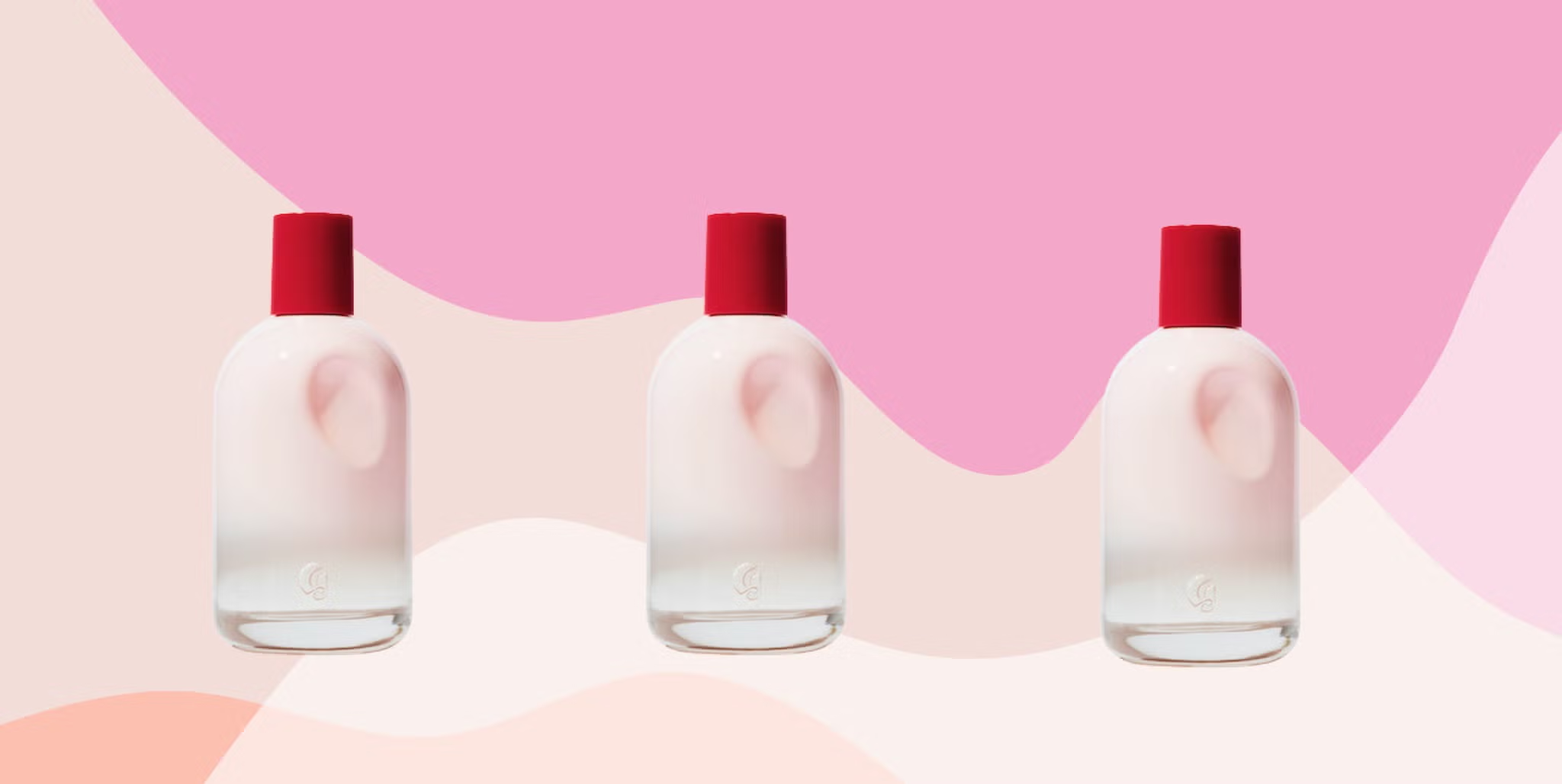
Le Labo Santal 33 (2011) opened a new chapter and became a cultural phenomenon. You for Glossier (2017) connected with an entirely new generation of consumers. Gucci Bamboo (2015), Phlur Father Figure (2023), Le Labo Thé Matcha 26 (2021) and my continued work with Le Labo helped me explore very different facets of perfumery. I’m proud that these creations are so diverse because they reflect what I’ve always tried to do: keep moving, keep learning and never repeat myself.

Was becoming a master perfumer ever a goal of yours? Or is it something that just happened over the years?
When I started my career, I wasn’t thinking about titles. I was thinking about becoming a better perfumer. My goals were much simpler: learn from great mentors, create fragrances that people would remember and continue growing creatively. Looking back, becoming a master perfumer feels less like reaching a destination and more like the natural result of decades spent pursuing excellence, curiosity and reinvention.

One of the lessons I’ve always carried with me is that you should never remain stuck in a rut. You have to keep looking forward. That mindset has probably guided me more than any specific career ambition.
Are there any perks to being a master perfumer?
The greatest perk is probably feeling part of a lineage. I am honored to join colleagues whom I deeply admire and whose careers I have followed for many years. There is also something rewarding about knowing that your peers and your company recognise not only what you have created, but how you have contributed to the profession itself.
That being said, there is no special parking spot and no secret master perfumer lounge! The real reward remains the same as it has always been: creating fragrances.
For the upcoming official event in September 2026, would thoughts about what fragrance you’re going to wear occur to you?
Absolutely! Perfumers think about fragrance the way musicians think about music. The challenge will be choosing just one. I tend to wear fragrances that have personal meaning rather than simply making a statement. I already have something in mind that I’ve been working on for the occasion, but I may not decide until the very last minute.

Fortunately, September in Paris offers wonderful weather for fragrance, so I have time to think about it.
*Available from Skins.